Meet the Author: Rüdiger Safranski
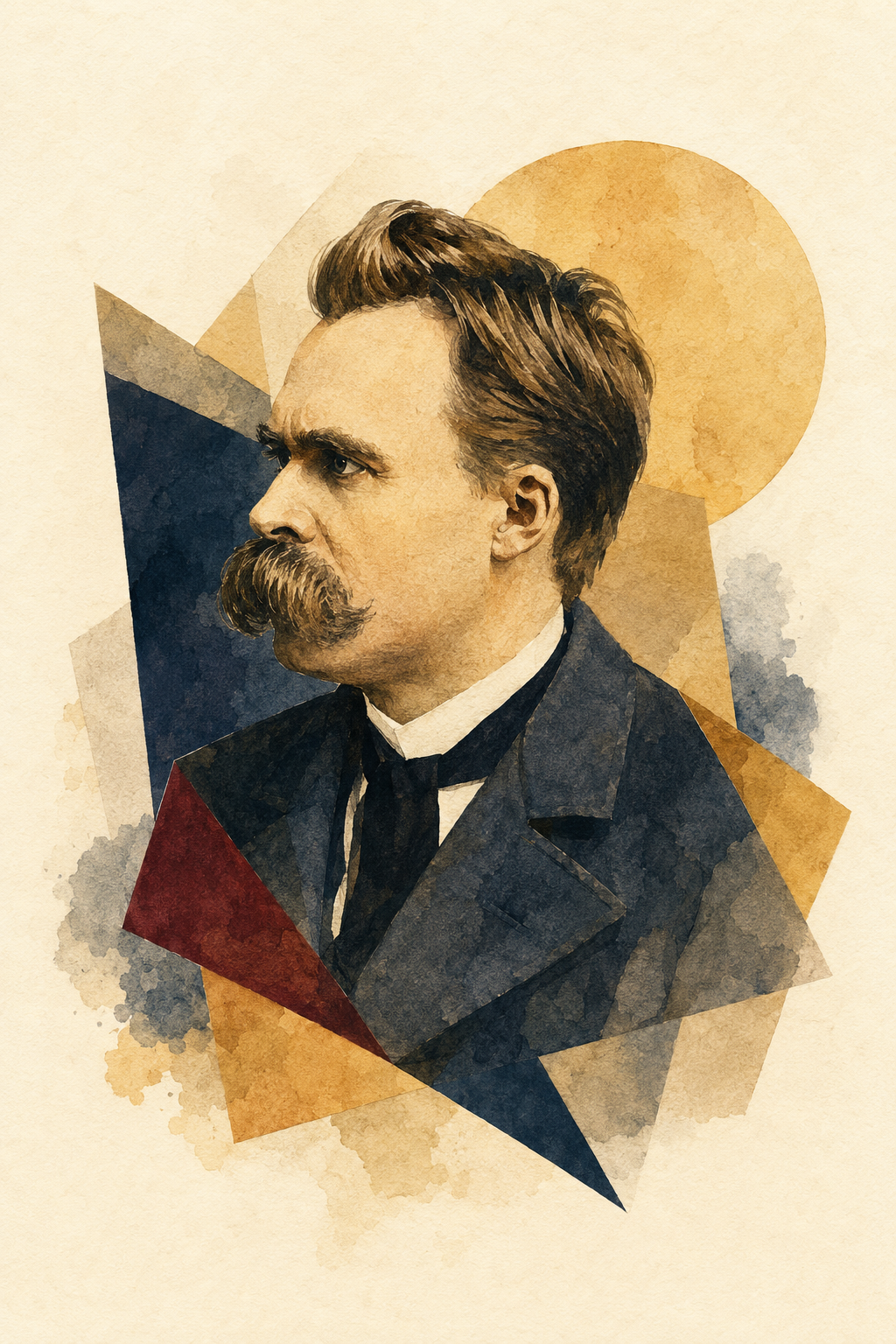
An illustrated profile of the philosopher, critic, and biographer whose approach connects Nietzsche's ideas with temperament, friendship, illness, and cultural crisis.
A Book Club Reading Room collection
Reading companions for Rüdiger Safranski's intellectual biography
Follow Nietzsche from Greek tragedy and Schopenhauer through eternal recurrence, Zarathustra, will to power, and the difficult question of compassion.
Designed for thoughtful reading and confident discussion
A suggested reading journey
The first public collection
An illustrated profile of the philosopher, critic, and biographer whose approach connects Nietzsche's ideas with temperament, friendship, illness, and cultural crisis.
A concise orientation to Safranski's unusual opening and its Romantic, skeptical, and mature versions of Nietzsche.
Nietzsche's movement from philology through Schopenhauer toward artistic self-formation, music, Wagner, and the effort to shape a life.
A plain-language guide to ancient tragedy, Apollo and Dionysus, the chorus, suffering, Socrates, pessimism, and life affirmation.
An illustrated biography of the philosopher and physician whose psychological and historical approach influenced Nietzsche's critique of morality.
A visual and written companion to Nietzsche's most demanding thought experiment, his dehumanized view of nature, and the challenge of affirming life.
Self-overcoming, the three metamorphoses, creativity, perspectivism, genealogy, morality, and the unfinished project to revalue all values.
A critical assessment of power, rank, hardness, superiority, command, and whether creative self-overcoming can be separated from domination.